What size slow cooker do I need?
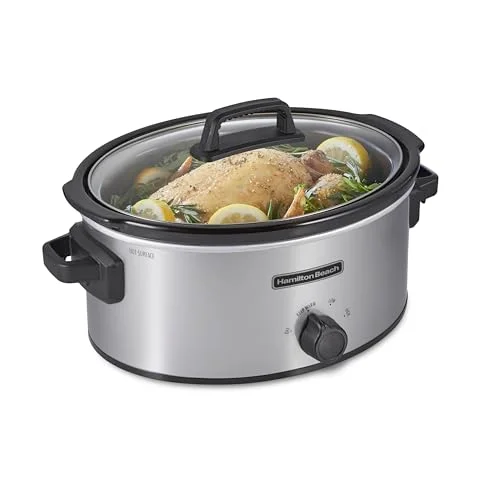
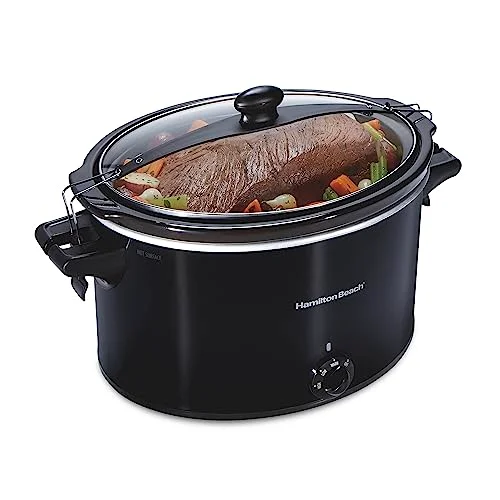
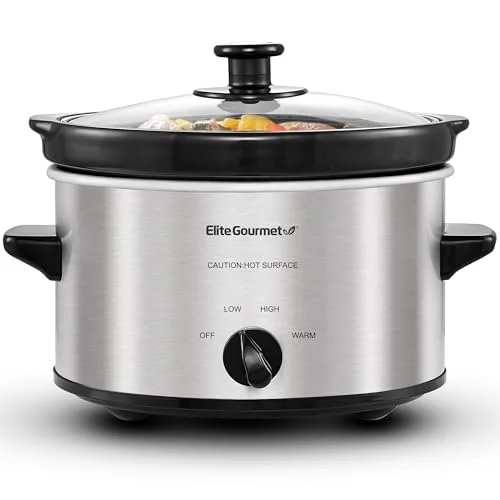
Size it to the food you cook most often, not the biggest meal of the year. The USDA advises filling a slow cooker no less than half and no more than two-thirds full, so a 6-quart crock wants roughly three to four quarts of food. As a rough guide, 1.5 to 2 quarts suits one or two people, dips and sides; 4 quarts suits three or four; 6 to 7 quarts is the family default; 8 to 10 quarts is for crowds and batch cooking. Hamilton Beach’s own figures agree: four or more servings from its 4-quart, ten or more from its 8-quart.
Is there a real difference between Low and High?
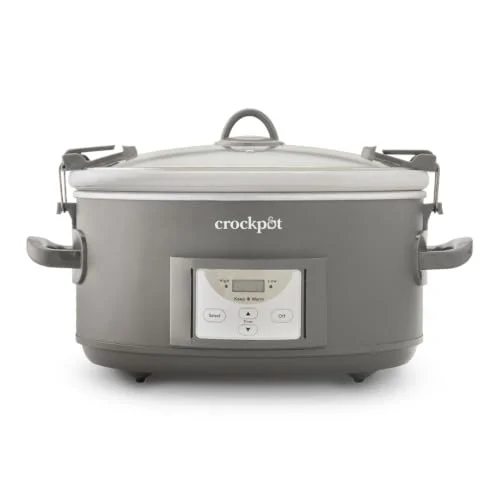
Less than the names suggest. On most slow cookers both settings end up near the same gentle simmer; High simply gets there sooner. That is why recipes pair them: Crock-Pot’s one-touch 6-quart offers 4 or 6 hours on High and 8 or 10 hours on Low, roughly two hours of Low for every hour of High. Tough, collagen-rich cuts such as chuck or pork shoulder tend to turn out more tender on Low, because they spend longer in the range where connective tissue breaks down. The USDA suggests starting on High for the first hour when you can, then switching to Low.
Is it safe to leave a slow cooker on while I’m out all day?
Slow cookers are designed to cook unattended, and the USDA considers them safe when used as intended: start with thawed food, fill the crock between half and two-thirds, keep the lid on, and stand the cooker on a dry, heat-safe counter with space around it. A manual cooker keeps going at whatever setting you leave it on; a programmable one counts down and drops to Warm, the better match for a ten-hour day. To confirm meat is done, use a thermometer: USDA safe minimums are 165°F for poultry, 160°F for ground meat, and 145°F with a three-minute rest for whole cuts of beef and pork.
Can I put frozen meat straight into a slow cooker?
The USDA says no: thaw meat and poultry before it goes in. A slow cooker heats gradually, and a frozen roast or a block of frozen chicken can hold the food in what the USDA calls the danger zone, 40 to 140°F, for longer than is safe. Thaw it in the refrigerator instead. The same guidance says cooked leftovers should not be reheated in a slow cooker: bring them to steaming on the stove or in a microwave first, then use the cooker only to keep them hot for serving.
Do I need to brown meat before slow cooking it?
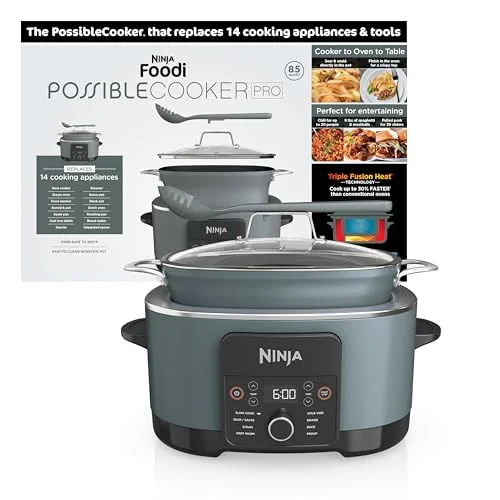
Not for safety, but often for flavor. A slow cooker never gets the surface of the meat hot enough to brown it; the deep, savory crust that comes from searing needs far more heat than a gentle simmer provides. With ground meat, browning also renders out fat before it goes into a chili or sauce. You can brown in a skillet and scrape everything into the crock, or choose a searing multi-cooker such as the Ninja PossibleCooker or Hamilton Beach’s 9-in-1, which sear in their own pots.
Stoneware or nonstick: which insert is better?
Stoneware is heavy, holds heat evenly, and on many models is dishwasher-safe and oven-safe — Crock-Pot rates one 7-quart crock to 400°F, and OLIXIS rates its pot to 300°F, but not under the broiler. Its weak spots are weight and sudden temperature changes, so never pour cold water into a hot crock. Nonstick inserts trade some of that for easier cleanup. Ceramic-coated crocks from bella and Crock-Pot release food more readily, and the metal pots in searing multi-cookers can brown on their own base. Coatings ask for wooden or silicone tools and gentle washing.
Is a programmable slow cooker worth it over a manual one?
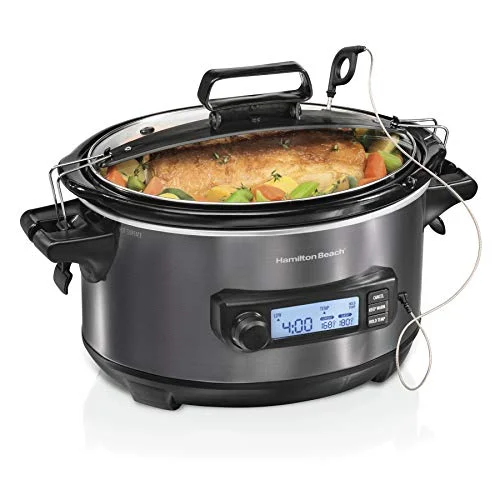
If you leave the house for the whole day, usually yes. A manual slow cooker has a dial and no clock: it cooks at the setting you choose until somebody turns it off, so an eight-hour recipe becomes a ten-hour one if you get home late. A programmable model counts down and switches to Warm. Timers differ: Hamilton Beach’s Set & Forget models offer fixed steps of 2, 4, 6, 8 or 10 hours, while Chefman’s 7-quart sets anything from 30 minutes to 24 hours. If someone is home most afternoons, a manual dial does the job.